
Flowering & Ornamental Plant Care
Flowering Plants
Care guidance for flowering and ornamental landscape plants sold by Fruit Trees Only in Northeast Florida.
These plants have very different moisture, light, pruning, and cold-tolerance needs. The old one-size-fits-all instructions have been replaced with plant-appropriate guidance.
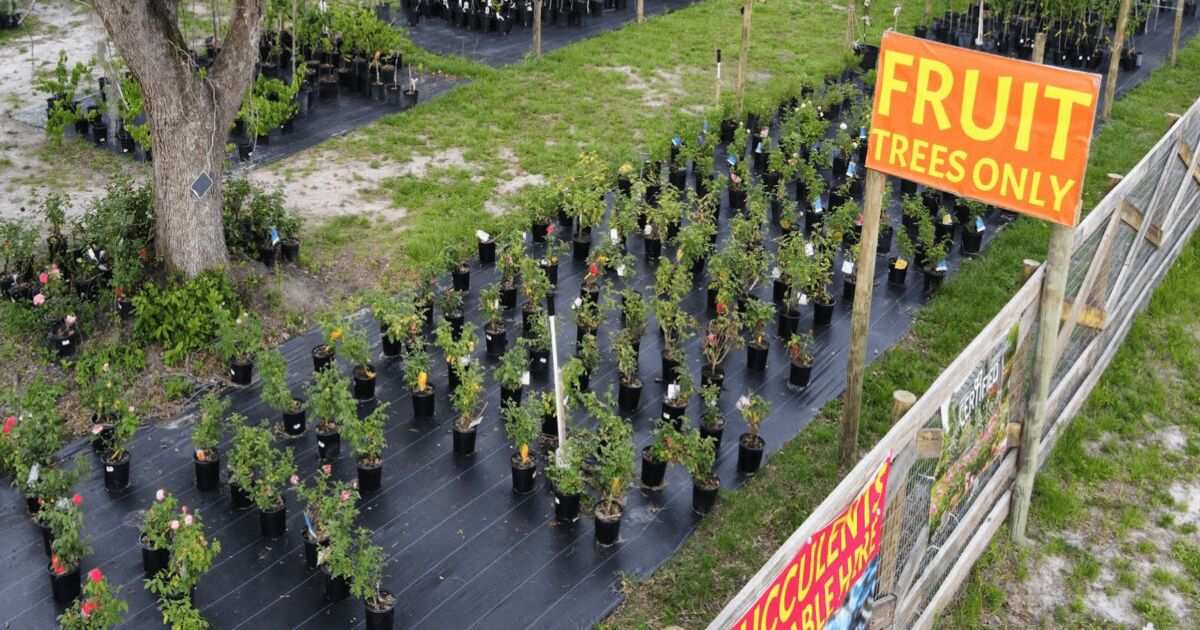
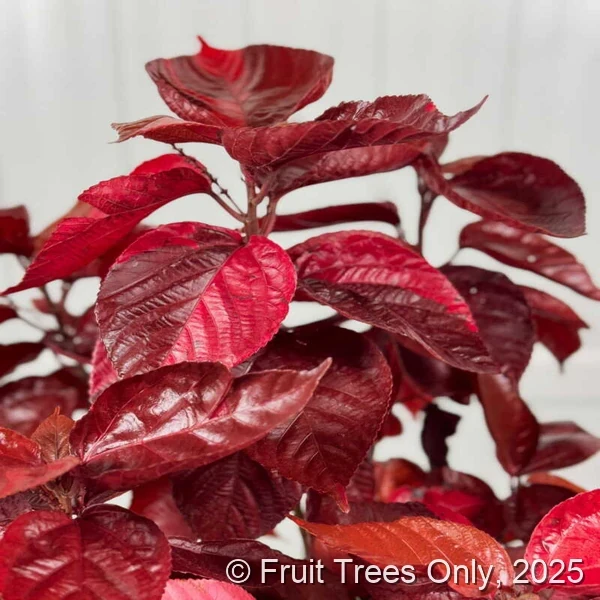
Acalypha - Louisiana Red
- Light: Full sun to part shade depending on species; use the plant’s mature light requirement rather than a generic tag placeholder.
- Soil: Well-drained soil.
- Water: Water regularly during establishment; adjust to species needs once rooted.
- Fertilizer: Use light, appropriate fertilizer only during active growth.
- Pruning: Remove dead/damaged growth and prune according to the plant’s growth habit rather than automatically “after bloom.”
- Cold: Confirm freeze tolerance for St. Augustine; many tropical ornamentals require protection.
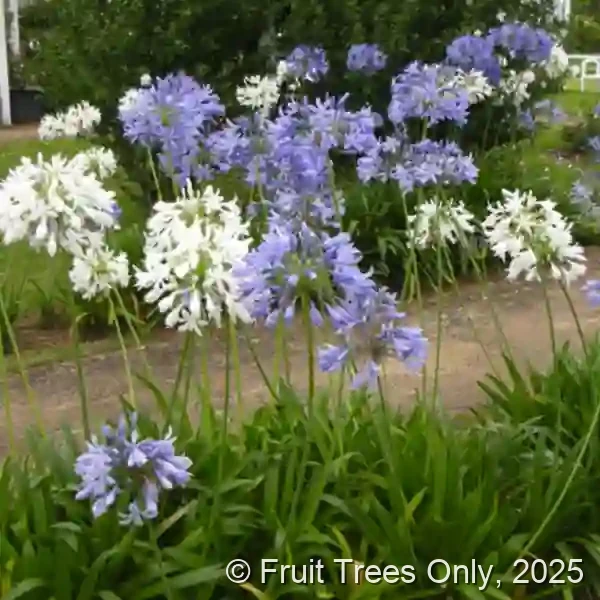
Agapanthus
- Light: Full sun to part shade depending on species; use the plant’s mature light requirement rather than a generic tag placeholder.
- Soil: Well-drained soil.
- Water: Water regularly during establishment; adjust to species needs once rooted.
- Fertilizer: Use light, appropriate fertilizer only during active growth.
- Pruning: Remove dead/damaged growth and prune according to the plant’s growth habit rather than automatically “after bloom.”
- Cold: Confirm freeze tolerance for St. Augustine; many tropical ornamentals require protection.
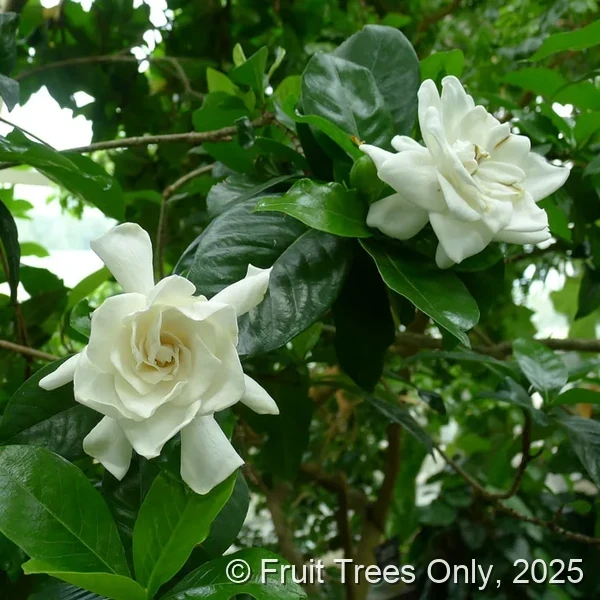
Aimee Gardenia
- Light: Morning sun with afternoon protection or bright filtered light.
- Soil: Acidic, organic, well-drained soil.
- Water: Keep evenly moist but not saturated.
- Fertilizer: Use an acid-forming fertilizer during active growth; monitor iron deficiency in high-pH soil.
- Pruning: Prune soon after flowering so next season’s buds are not removed.
- Pests: Watch for whiteflies, scales, and sooty mold.
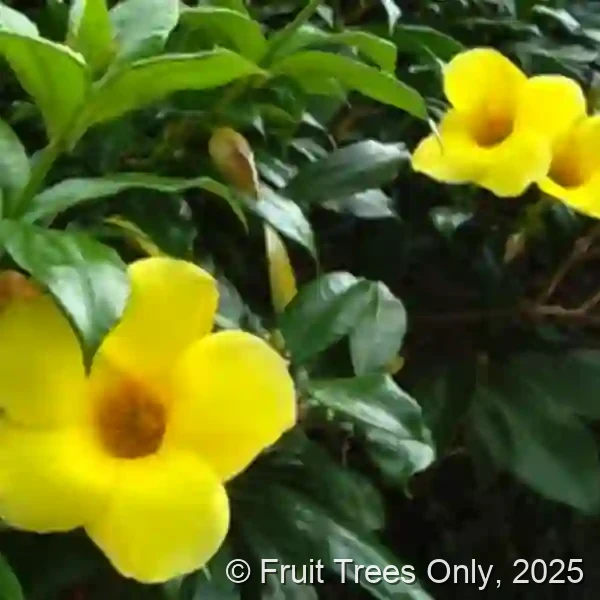
Alamanda
- Light: Full sun to part shade depending on species; use the plant’s mature light requirement rather than a generic tag placeholder.
- Soil: Well-drained soil.
- Water: Water regularly during establishment; adjust to species needs once rooted.
- Fertilizer: Use light, appropriate fertilizer only during active growth.
- Pruning: Remove dead/damaged growth and prune according to the plant’s growth habit rather than automatically “after bloom.”
- Cold: Confirm freeze tolerance for St. Augustine; many tropical ornamentals require protection.
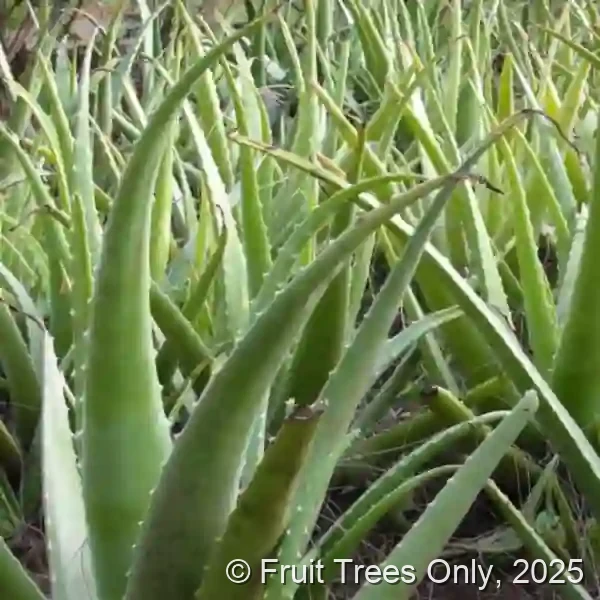
Aloe Vera
- Light: Full sun to bright light.
- Soil: Very well-drained soil; avoid wet roots.
- Water: Water deeply, then allow soil to dry substantially before watering again.
- Fertilizer: Light feeding only during active growth.
- Pruning: Remove spent flower stalks or damaged leaves; do not use generic “prune after bloom” shrub instructions.
- Cold: Protect from hard freezes, especially in containers.
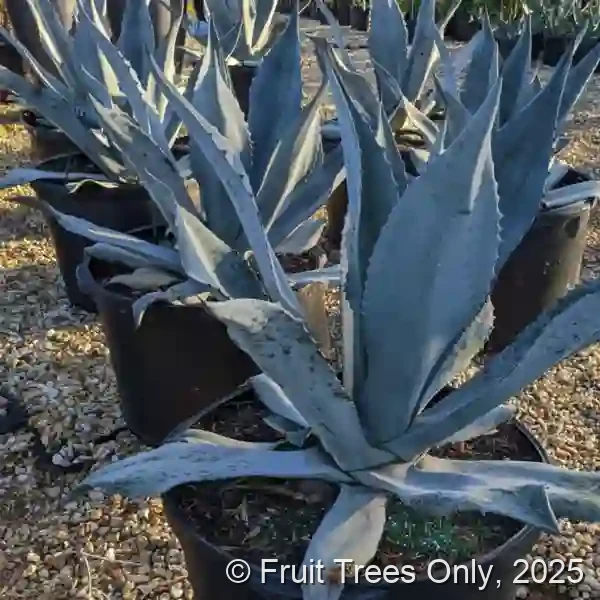
Blue Agave
- Light: Full sun to bright light.
- Soil: Very well-drained soil; avoid wet roots.
- Water: Water deeply, then allow soil to dry substantially before watering again.
- Fertilizer: Light feeding only during active growth.
- Pruning: Remove spent flower stalks or damaged leaves; do not use generic “prune after bloom” shrub instructions.
- Cold: Protect from hard freezes, especially in containers.
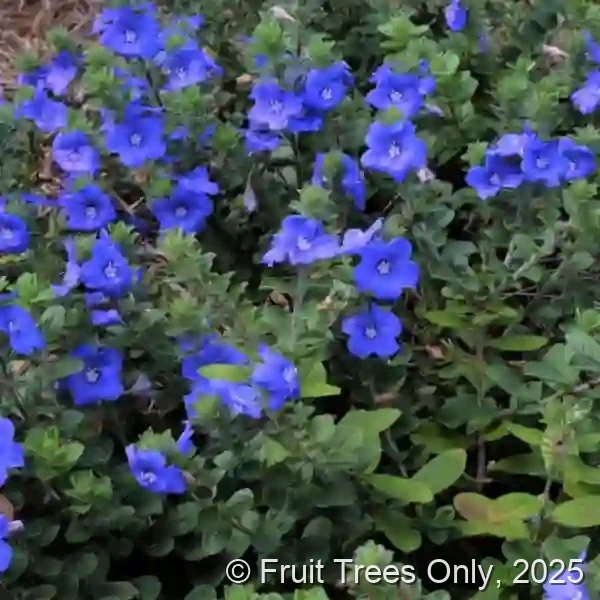
Blue Daze
- Light: Full sun to part shade depending on species; use the plant’s mature light requirement rather than a generic tag placeholder.
- Soil: Well-drained soil.
- Water: Water regularly during establishment; adjust to species needs once rooted.
- Fertilizer: Use light, appropriate fertilizer only during active growth.
- Pruning: Remove dead/damaged growth and prune according to the plant’s growth habit rather than automatically “after bloom.”
- Cold: Confirm freeze tolerance for St. Augustine; many tropical ornamentals require protection.
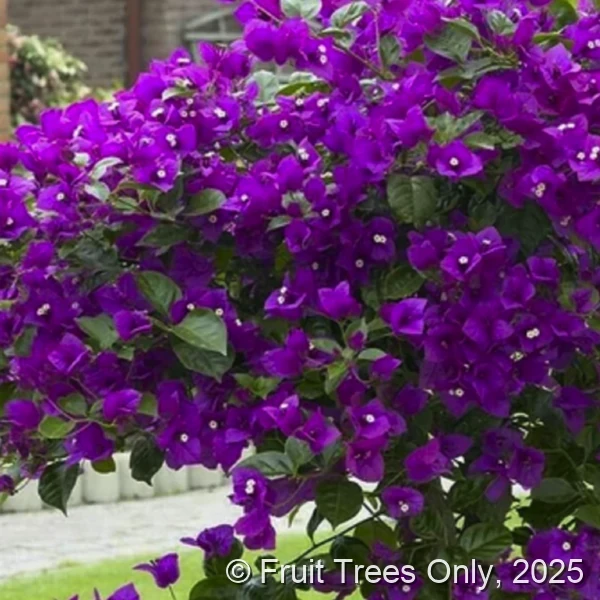
Bougainvillea
- Light: Full sun is essential for heavy bloom.
- Soil: Excellent drainage.
- Water: Allow some drying between deep waterings once established.
- Fertilizer: Avoid excessive nitrogen, which promotes leaves over flowers.
- Pruning: Prune/pinch after bloom cycles to control size and encourage branching.
- Cold: Freeze-sensitive; protect in Northeast Florida.
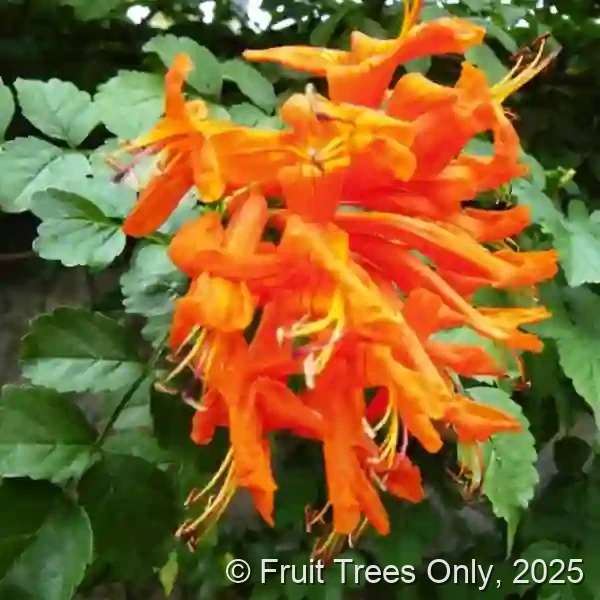
Cape Honeysuckle
- Light: Full sun to part shade depending on species; use the plant’s mature light requirement rather than a generic tag placeholder.
- Soil: Well-drained soil.
- Water: Water regularly during establishment; adjust to species needs once rooted.
- Fertilizer: Use light, appropriate fertilizer only during active growth.
- Pruning: Remove dead/damaged growth and prune according to the plant’s growth habit rather than automatically “after bloom.”
- Cold: Confirm freeze tolerance for St. Augustine; many tropical ornamentals require protection.
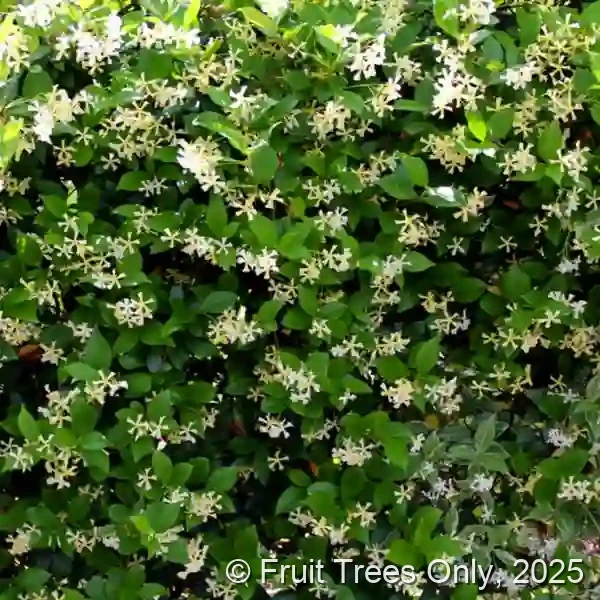
Confederate Jasmine
- Light: Full sun to part shade; flowering is generally best with strong light.
- Soil: Well-drained soil with organic matter.
- Water: Regular water while establishing; avoid waterlogged soil.
- Fertilizer: Light balanced feeding during active growth.
- Pruning: Prune after the main flowering flush to shape and remove tangled or weak growth.
- Cold: Cold tolerance varies widely by type; tropical jasmines need freeze protection.
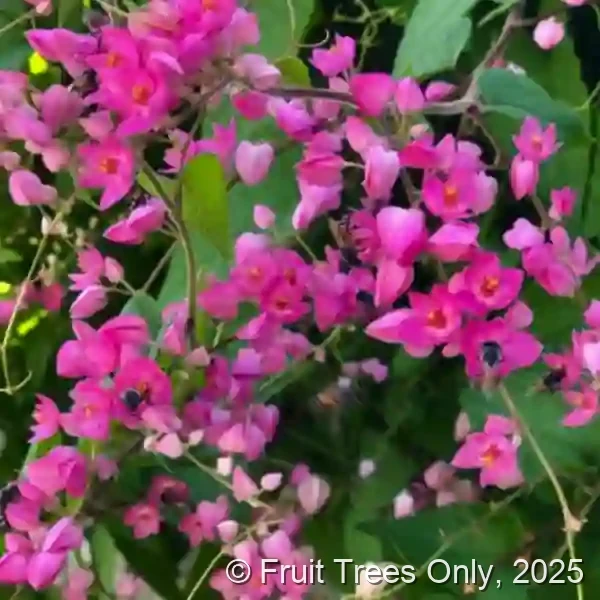
Coral Creeper
- Light: Full sun to part shade depending on species; use the plant’s mature light requirement rather than a generic tag placeholder.
- Soil: Well-drained soil.
- Water: Water regularly during establishment; adjust to species needs once rooted.
- Fertilizer: Use light, appropriate fertilizer only during active growth.
- Pruning: Remove dead/damaged growth and prune according to the plant’s growth habit rather than automatically “after bloom.”
- Cold: Confirm freeze tolerance for St. Augustine; many tropical ornamentals require protection.
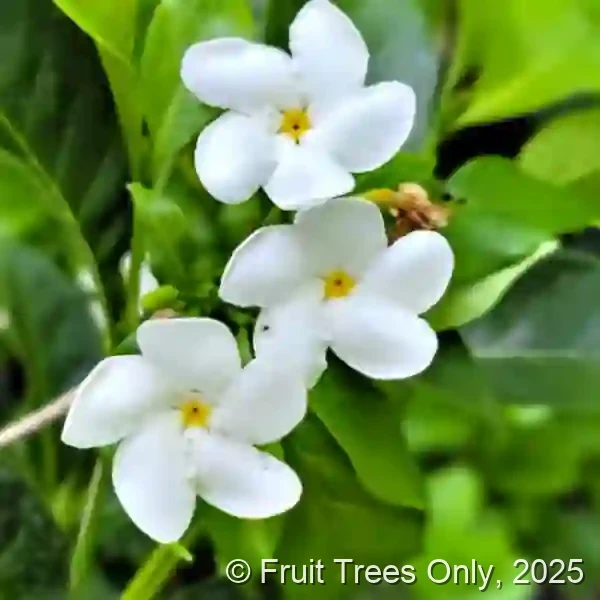
Crape Jasmine
- Light: Full sun to part shade; flowering is generally best with strong light.
- Soil: Well-drained soil with organic matter.
- Water: Regular water while establishing; avoid waterlogged soil.
- Fertilizer: Light balanced feeding during active growth.
- Pruning: Prune after the main flowering flush to shape and remove tangled or weak growth.
- Cold: Cold tolerance varies widely by type; tropical jasmines need freeze protection.
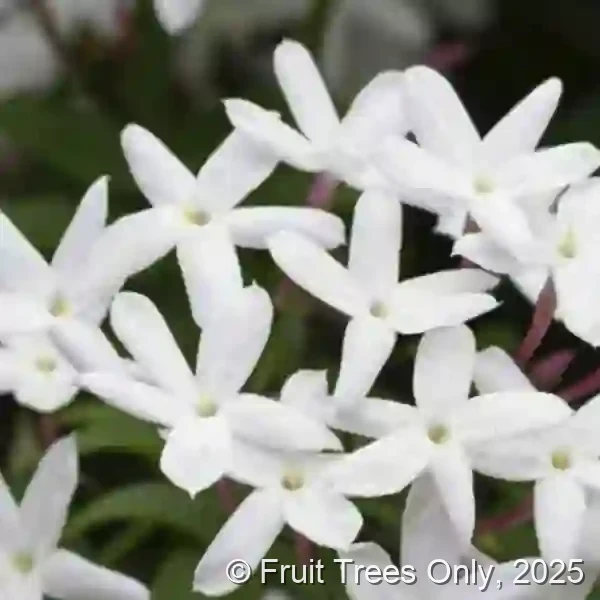
Downy Jasmine
- Light: Full sun to part shade; flowering is generally best with strong light.
- Soil: Well-drained soil with organic matter.
- Water: Regular water while establishing; avoid waterlogged soil.
- Fertilizer: Light balanced feeding during active growth.
- Pruning: Prune after the main flowering flush to shape and remove tangled or weak growth.
- Cold: Cold tolerance varies widely by type; tropical jasmines need freeze protection.
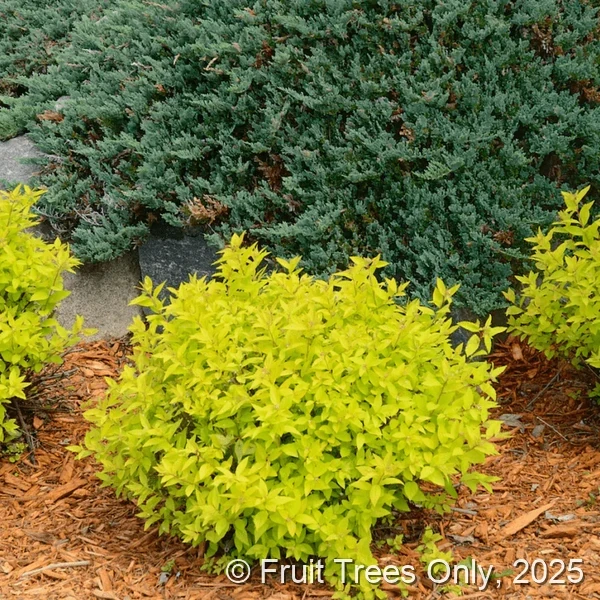
Duranta Gold Mound
- Light: Full sun to part shade depending on species; use the plant’s mature light requirement rather than a generic tag placeholder.
- Soil: Well-drained soil.
- Water: Water regularly during establishment; adjust to species needs once rooted.
- Fertilizer: Use light, appropriate fertilizer only during active growth.
- Pruning: Remove dead/damaged growth and prune according to the plant’s growth habit rather than automatically “after bloom.”
- Cold: Confirm freeze tolerance for St. Augustine; many tropical ornamentals require protection.
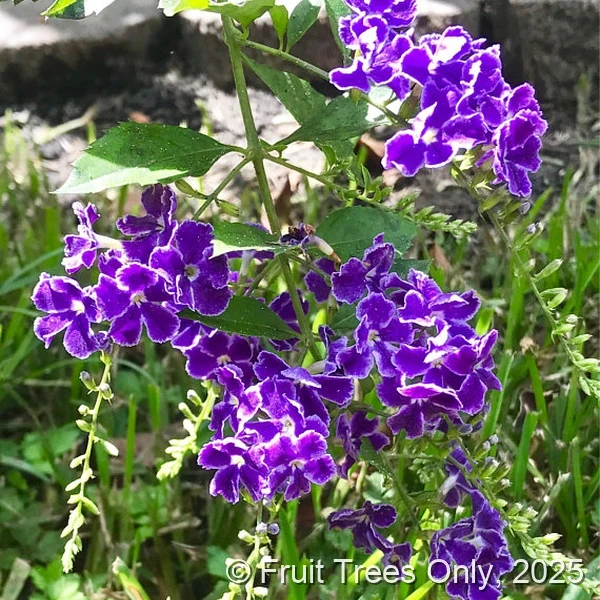
Duranta Purple Sapphire Showers
- Light: Full sun to part shade depending on species; use the plant’s mature light requirement rather than a generic tag placeholder.
- Soil: Well-drained soil.
- Water: Water regularly during establishment; adjust to species needs once rooted.
- Fertilizer: Use light, appropriate fertilizer only during active growth.
- Pruning: Remove dead/damaged growth and prune according to the plant’s growth habit rather than automatically “after bloom.”
- Cold: Confirm freeze tolerance for St. Augustine; many tropical ornamentals require protection.
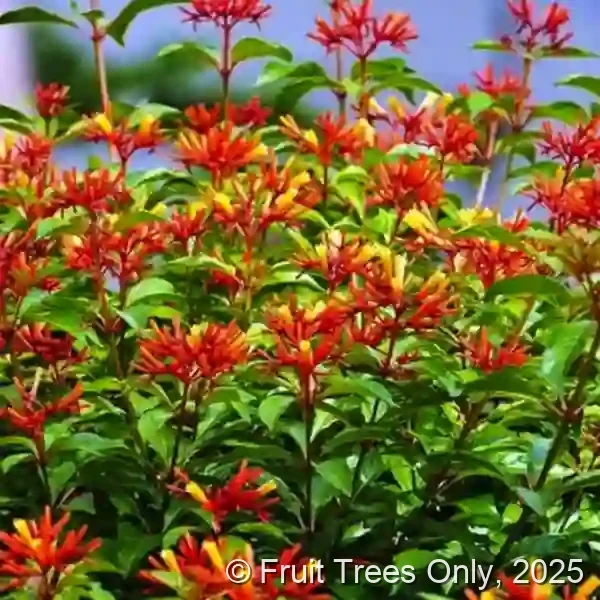
Firebush
- Light: Full sun to part shade; strongest flowering in sun.
- Soil: Adaptable, well-drained soil.
- Water: Regular water while establishing; fairly drought-tolerant once rooted.
- Fertilizer: Usually little fertilizer is needed.
- Pruning: Prune for size after cold weather or between bloom cycles; avoid frequent shearing if wildlife value is desired.
- Cold: Top growth can freeze back in North Florida and regrow from protected wood or roots.
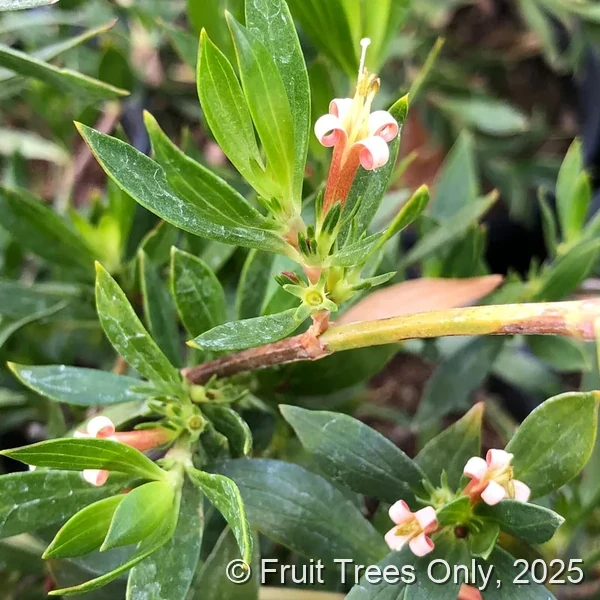
Golden Beach Creeper
- Light: Full sun to part shade depending on species; use the plant’s mature light requirement rather than a generic tag placeholder.
- Soil: Well-drained soil.
- Water: Water regularly during establishment; adjust to species needs once rooted.
- Fertilizer: Use light, appropriate fertilizer only during active growth.
- Pruning: Remove dead/damaged growth and prune according to the plant’s growth habit rather than automatically “after bloom.”
- Cold: Confirm freeze tolerance for St. Augustine; many tropical ornamentals require protection.
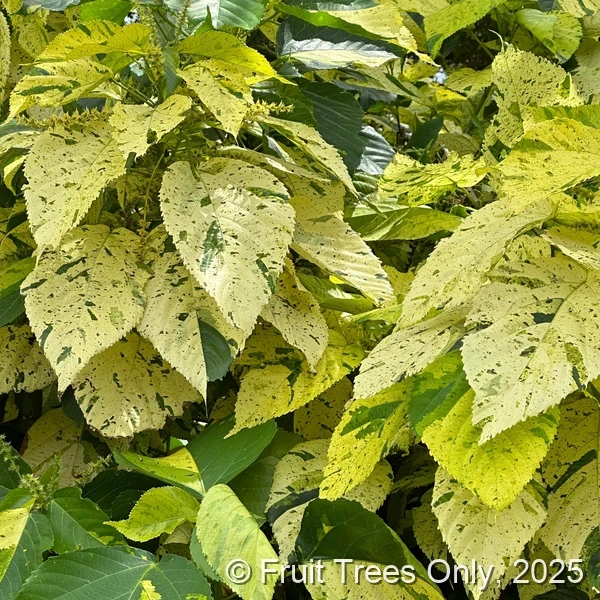
Java White Copperleaf
- Light: Full sun to part shade depending on species; use the plant’s mature light requirement rather than a generic tag placeholder.
- Soil: Well-drained soil.
- Water: Water regularly during establishment; adjust to species needs once rooted.
- Fertilizer: Use light, appropriate fertilizer only during active growth.
- Pruning: Remove dead/damaged growth and prune according to the plant’s growth habit rather than automatically “after bloom.”
- Cold: Confirm freeze tolerance for St. Augustine; many tropical ornamentals require protection.
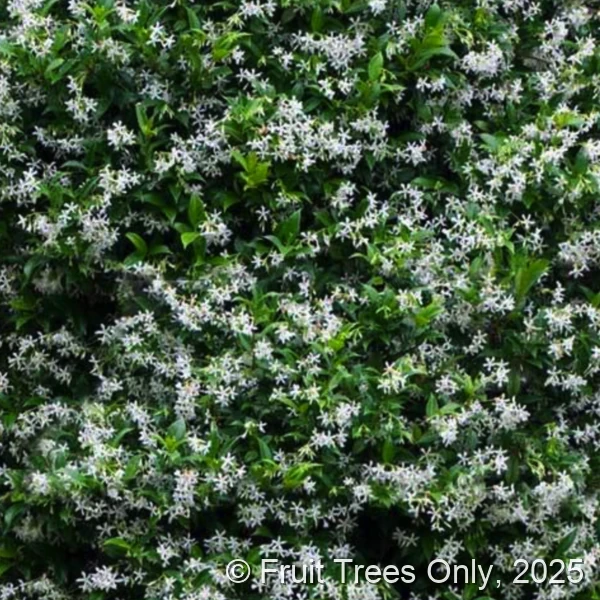
Jasmine
- Light: Full sun to part shade; flowering is generally best with strong light.
- Soil: Well-drained soil with organic matter.
- Water: Regular water while establishing; avoid waterlogged soil.
- Fertilizer: Light balanced feeding during active growth.
- Pruning: Prune after the main flowering flush to shape and remove tangled or weak growth.
- Cold: Cold tolerance varies widely by type; tropical jasmines need freeze protection.
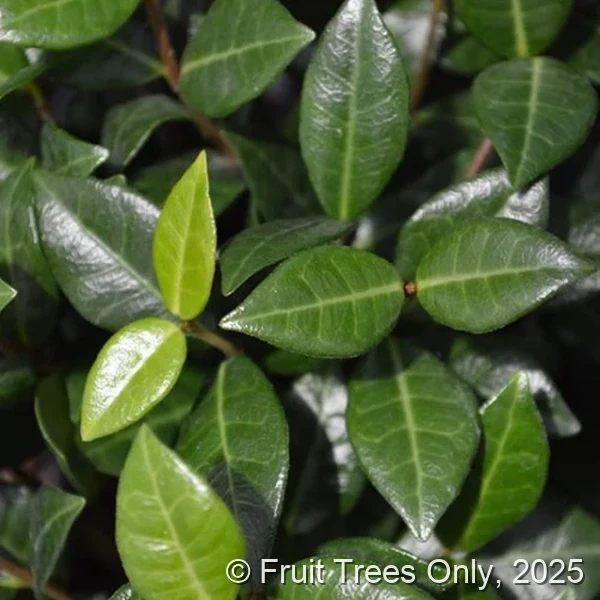
Jasmine Minima
- Light: Full sun to part shade; flowering is generally best with strong light.
- Soil: Well-drained soil with organic matter.
- Water: Regular water while establishing; avoid waterlogged soil.
- Fertilizer: Light balanced feeding during active growth.
- Pruning: Prune after the main flowering flush to shape and remove tangled or weak growth.
- Cold: Cold tolerance varies widely by type; tropical jasmines need freeze protection.
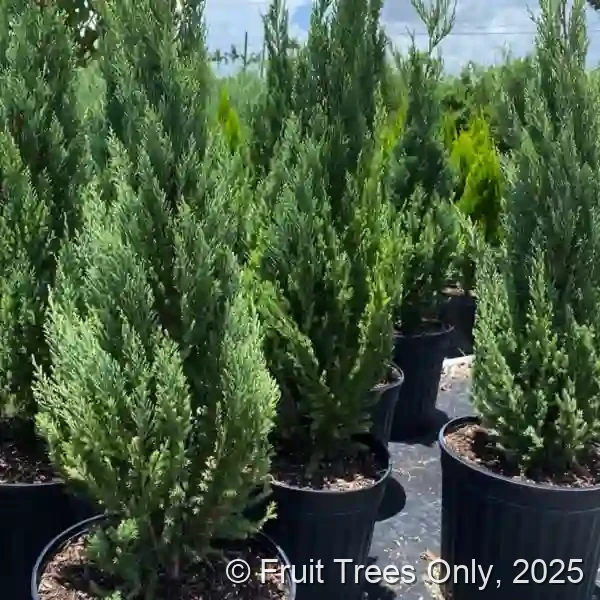
Juniper
- Light: Full sun.
- Soil: Excellent drainage.
- Water: Water during establishment; mature junipers prefer to dry between irrigation.
- Fertilizer: Little fertilizer is normally needed.
- Pruning: Tip-prune selectively; avoid cutting back into large bare old wood where regrowth may be poor.
- Humidity: Give excellent airflow and avoid overwatering.
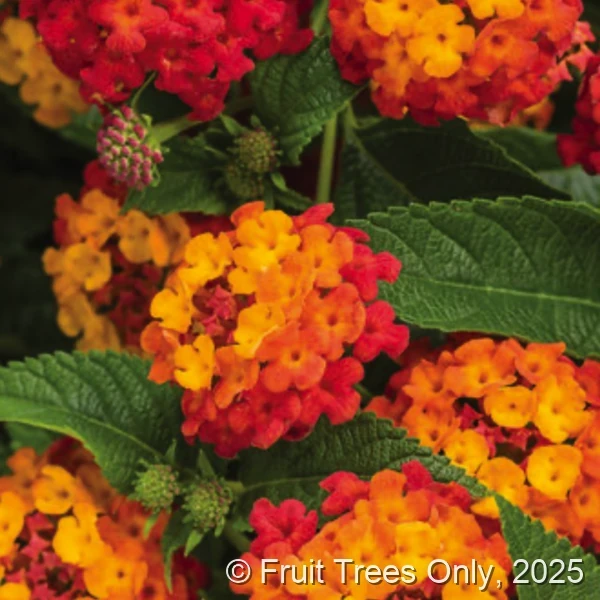
Lantana - Assorted Colors
- Light: Full sun.
- Soil: Well-drained soil; avoid overwatering.
- Water: Water during establishment, then only during extended drought.
- Fertilizer: Minimal fertilizer; excess feeding reduces flowering.
- Pruning: Cut back periodically to renew growth and remove cold-damaged stems in spring.
- Florida note: Some lantana types can spread aggressively; favor sterile/non-invasive selections where available.
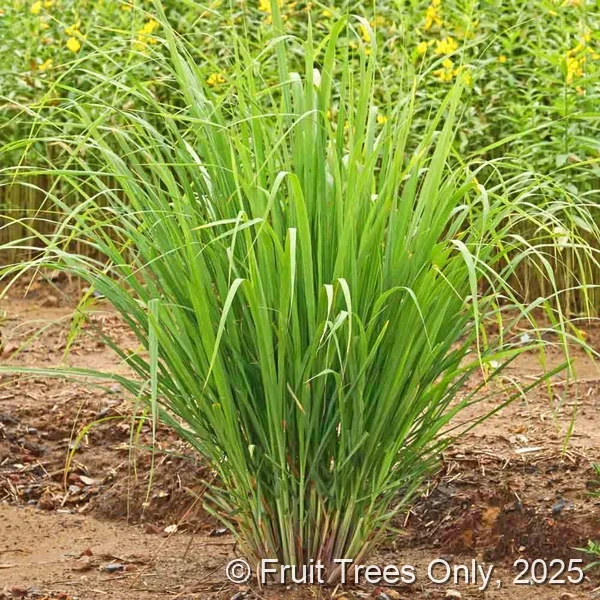
Lemon Grass
- Light: Full sun.
- Soil: Well-drained soil with moderate fertility.
- Water: Consistent moisture during warm growth.
- Fertilizer: Light periodic feeding supports vigorous foliage.
- Harvest: Cut outer stalks/leaves as needed.
- Cold: Top growth may be damaged by frost; clumps often resprout if the crown survives.
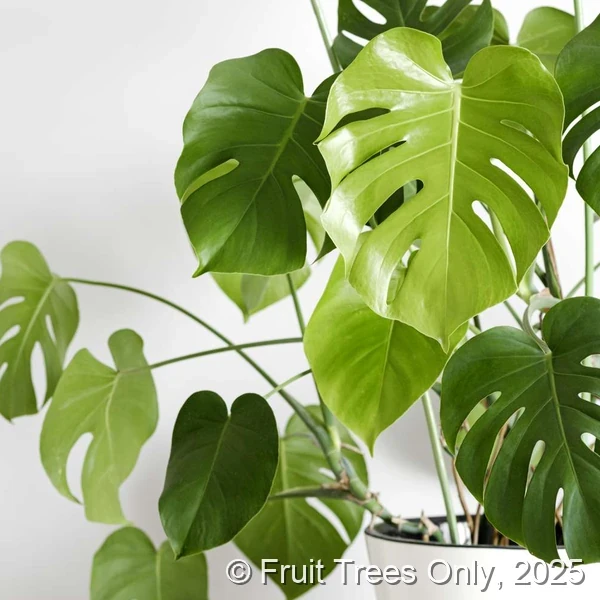
Monstera Deliciosa
- Light: Bright shade or filtered sun; avoid intense all-day sun on acclimated shade-grown plants.
- Soil: Organic, well-drained soil.
- Water: Water when the upper soil begins to dry; avoid constantly wet roots.
- Fertilizer: Light regular feeding during warm active growth.
- Support: Provide a sturdy support if vertical growth is desired.
- Cold: Tropical; protect from freezes and cold wind.
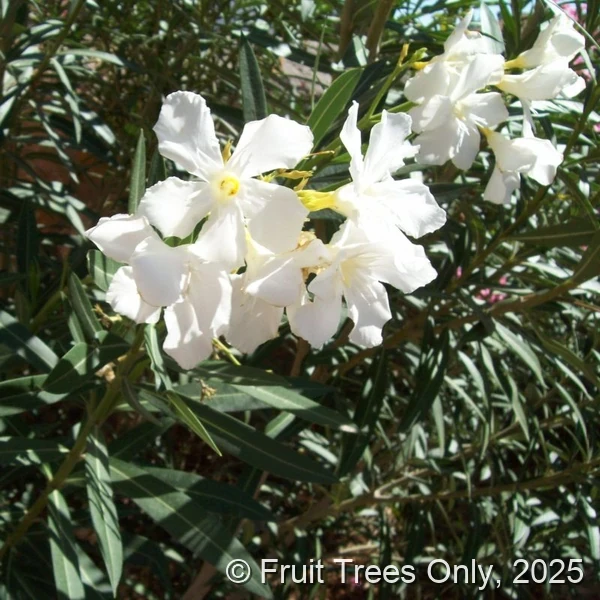
Oleander
- Light: Full sun.
- Soil: Adaptable, well-drained soil.
- Water: Water to establish; mature plants are drought-tolerant.
- Pruning: Prune after flowering or as needed for size; avoid constant shearing if flowers are desired.
- Cold: Established plants can recover from moderate cold damage.
- Safety: All parts of oleander are highly toxic if ingested. Keep clippings away from children, pets, and livestock and do not burn them.
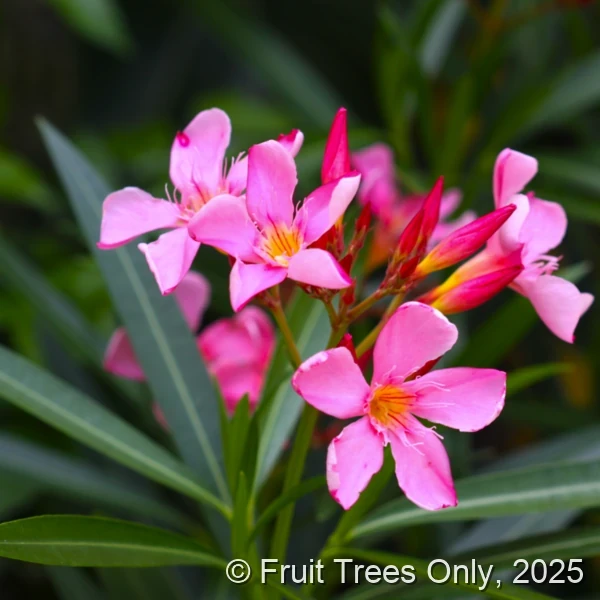
Oleander Pink
- Light: Full sun.
- Soil: Adaptable, well-drained soil.
- Water: Water to establish; mature plants are drought-tolerant.
- Pruning: Prune after flowering or as needed for size; avoid constant shearing if flowers are desired.
- Cold: Established plants can recover from moderate cold damage.
- Safety: All parts of oleander are highly toxic if ingested. Keep clippings away from children, pets, and livestock and do not burn them.
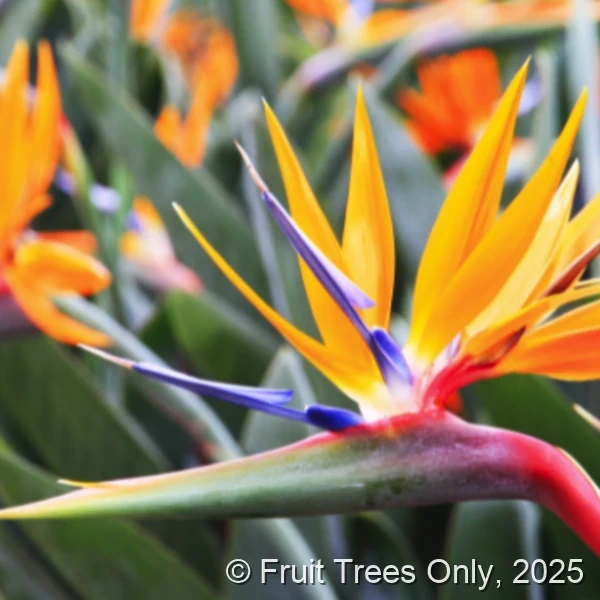
Orange Bird of Paradise
- Light: Full sun to bright part shade.
- Soil: Rich, well-drained soil.
- Water: Regular moisture during active growth; reduce during cool periods.
- Fertilizer: Feed several times during warm growth.
- Pruning: Remove dead leaves and spent flower stalks at the base rather than shearing.
- Cold: Protect from freezes; foliage is easily damaged.
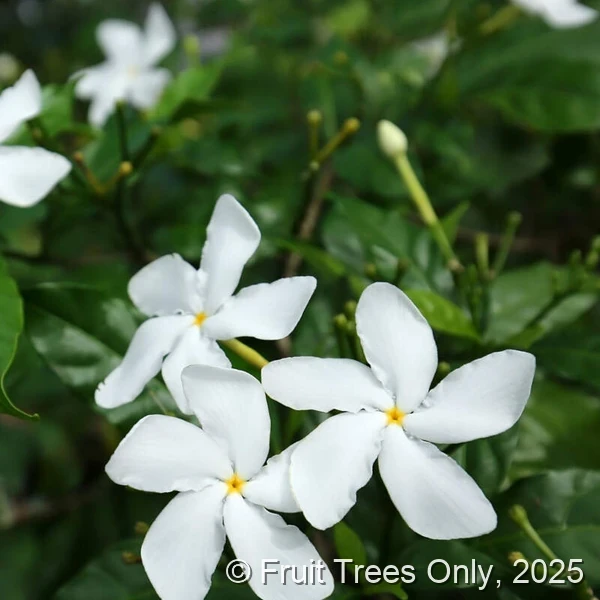
Pinwheel Jasmine
- Light: Full sun to part shade; flowering is generally best with strong light.
- Soil: Well-drained soil with organic matter.
- Water: Regular water while establishing; avoid waterlogged soil.
- Fertilizer: Light balanced feeding during active growth.
- Pruning: Prune after the main flowering flush to shape and remove tangled or weak growth.
- Cold: Cold tolerance varies widely by type; tropical jasmines need freeze protection.
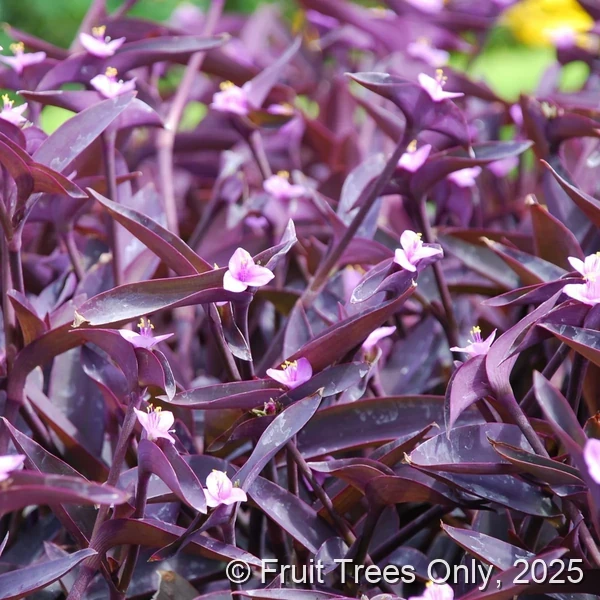
Purple Heart
- Light: Full sun to part shade depending on species; use the plant’s mature light requirement rather than a generic tag placeholder.
- Soil: Well-drained soil.
- Water: Water regularly during establishment; adjust to species needs once rooted.
- Fertilizer: Use light, appropriate fertilizer only during active growth.
- Pruning: Remove dead/damaged growth and prune according to the plant’s growth habit rather than automatically “after bloom.”
- Cold: Confirm freeze tolerance for St. Augustine; many tropical ornamentals require protection.
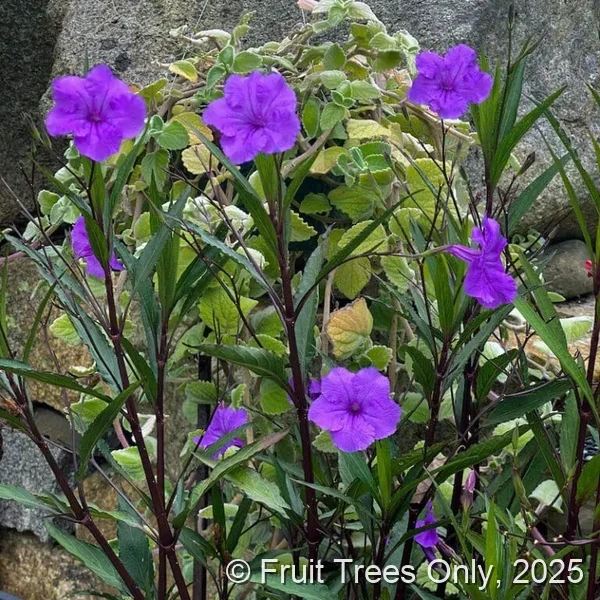
Purple Showers
- Light: Full sun to part shade depending on species; use the plant’s mature light requirement rather than a generic tag placeholder.
- Soil: Well-drained soil.
- Water: Water regularly during establishment; adjust to species needs once rooted.
- Fertilizer: Use light, appropriate fertilizer only during active growth.
- Pruning: Remove dead/damaged growth and prune according to the plant’s growth habit rather than automatically “after bloom.”
- Cold: Confirm freeze tolerance for St. Augustine; many tropical ornamentals require protection.
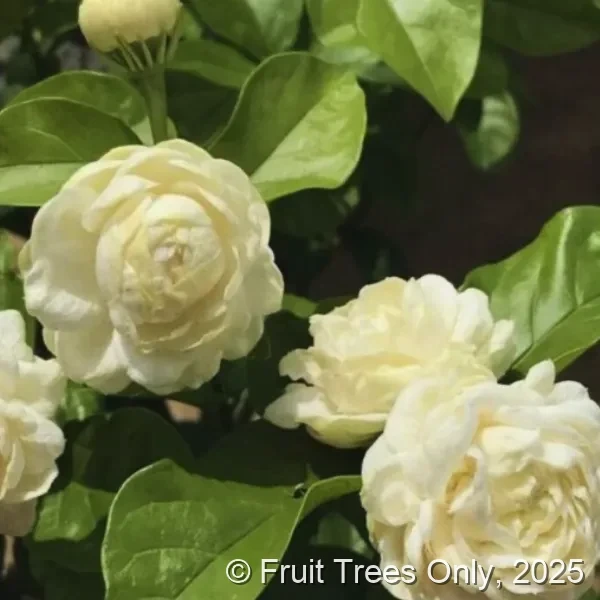
Sambac
- Light: Full sun to part shade; flowering is generally best with strong light.
- Soil: Well-drained soil with organic matter.
- Water: Regular water while establishing; avoid waterlogged soil.
- Fertilizer: Light balanced feeding during active growth.
- Pruning: Prune after the main flowering flush to shape and remove tangled or weak growth.
- Cold: Cold tolerance varies widely by type; tropical jasmines need freeze protection.
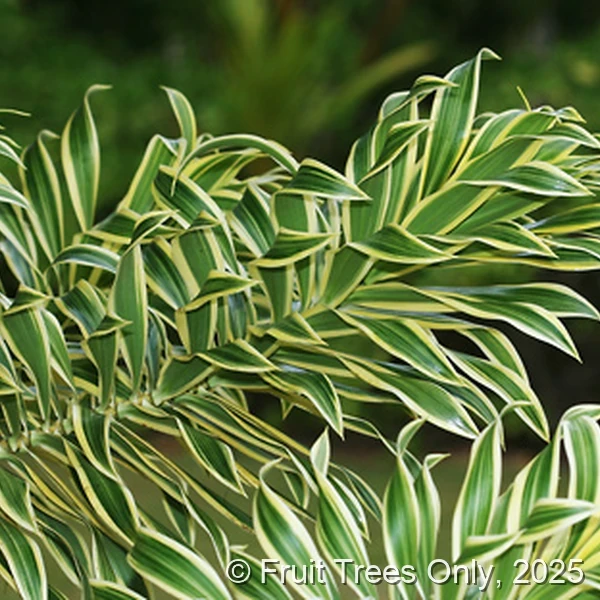
Song of India
- Light: Full sun to part shade depending on species; use the plant’s mature light requirement rather than a generic tag placeholder.
- Soil: Well-drained soil.
- Water: Water regularly during establishment; adjust to species needs once rooted.
- Fertilizer: Use light, appropriate fertilizer only during active growth.
- Pruning: Remove dead/damaged growth and prune according to the plant’s growth habit rather than automatically “after bloom.”
- Cold: Confirm freeze tolerance for St. Augustine; many tropical ornamentals require protection.

Star Jasmine
- Light: Full sun to part shade; flowering is generally best with strong light.
- Soil: Well-drained soil with organic matter.
- Water: Regular water while establishing; avoid waterlogged soil.
- Fertilizer: Light balanced feeding during active growth.
- Pruning: Prune after the main flowering flush to shape and remove tangled or weak growth.
- Cold: Cold tolerance varies widely by type; tropical jasmines need freeze protection.
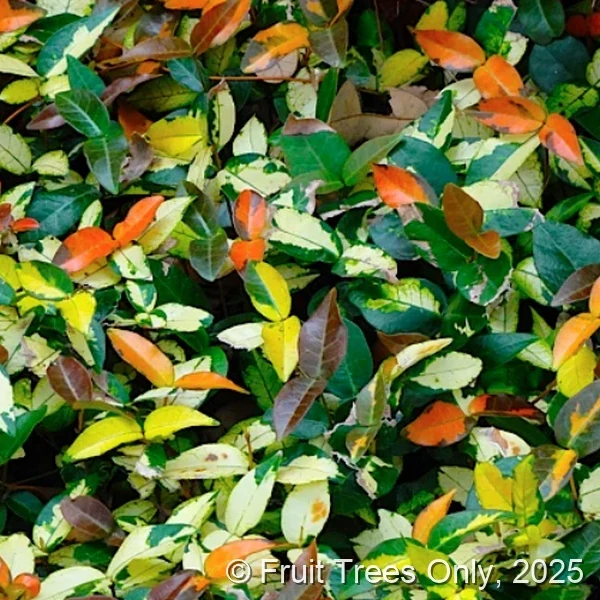
Sunset
- Light: Full sun to part shade depending on species; use the plant’s mature light requirement rather than a generic tag placeholder.
- Soil: Well-drained soil.
- Water: Water regularly during establishment; adjust to species needs once rooted.
- Fertilizer: Use light, appropriate fertilizer only during active growth.
- Pruning: Remove dead/damaged growth and prune according to the plant’s growth habit rather than automatically “after bloom.”
- Cold: Confirm freeze tolerance for St. Augustine; many tropical ornamentals require protection.

Variegated Jasmine
- Light: Full sun to part shade; flowering is generally best with strong light.
- Soil: Well-drained soil with organic matter.
- Water: Regular water while establishing; avoid waterlogged soil.
- Fertilizer: Light balanced feeding during active growth.
- Pruning: Prune after the main flowering flush to shape and remove tangled or weak growth.
- Cold: Cold tolerance varies widely by type; tropical jasmines need freeze protection.
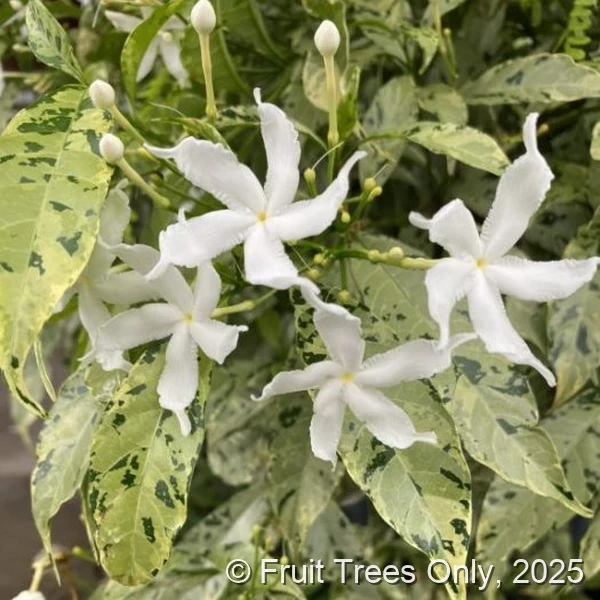
Variegated Minima Jasmine
- Light: Full sun to part shade; flowering is generally best with strong light.
- Soil: Well-drained soil with organic matter.
- Water: Regular water while establishing; avoid waterlogged soil.
- Fertilizer: Light balanced feeding during active growth.
- Pruning: Prune after the main flowering flush to shape and remove tangled or weak growth.
- Cold: Cold tolerance varies widely by type; tropical jasmines need freeze protection.
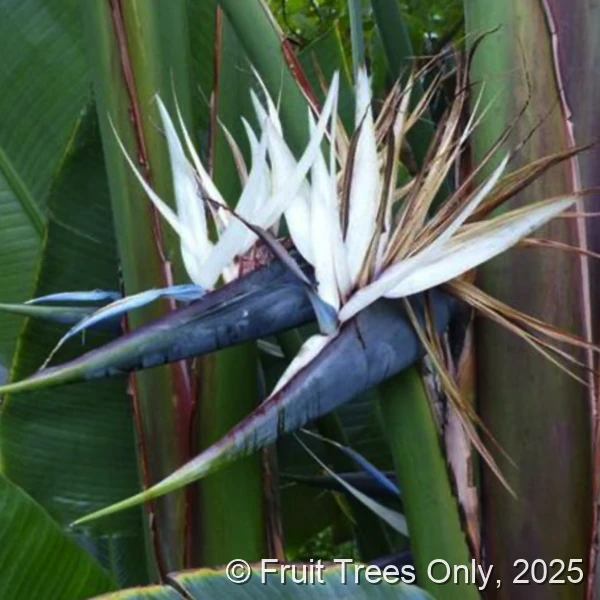
White Bird of Paradise
- Light: Full sun to bright part shade.
- Soil: Rich, well-drained soil.
- Water: Regular moisture during active growth; reduce during cool periods.
- Fertilizer: Feed several times during warm growth.
- Pruning: Remove dead leaves and spent flower stalks at the base rather than shearing.
- Cold: Protect from freezes; foliage is easily damaged.

White Shower
- Light: Full sun to part shade depending on species; use the plant’s mature light requirement rather than a generic tag placeholder.
- Soil: Well-drained soil.
- Water: Water regularly during establishment; adjust to species needs once rooted.
- Fertilizer: Use light, appropriate fertilizer only during active growth.
- Pruning: Remove dead/damaged growth and prune according to the plant’s growth habit rather than automatically “after bloom.”
- Cold: Confirm freeze tolerance for St. Augustine; many tropical ornamentals require protection.

Yesterday, Today, and Tomorrow
- Light: Full sun to part shade depending on species; use the plant’s mature light requirement rather than a generic tag placeholder.
- Soil: Well-drained soil.
- Water: Water regularly during establishment; adjust to species needs once rooted.
- Fertilizer: Use light, appropriate fertilizer only during active growth.
- Pruning: Remove dead/damaged growth and prune according to the plant’s growth habit rather than automatically “after bloom.”
- Cold: Confirm freeze tolerance for St. Augustine; many tropical ornamentals require protection.
Still stuck? Ask a plant question and our team will get back to you.